
Hi! The big thing I worked on this month was some brand new hacking mechanics. I’m very happy with how it turned out and already have more ideas on how to expand it further. I’ve also implemented a system for free loadouts that are obtainable from certain traders after you die. I also talk about some new objective types, including one that’s already been implemented.
New Hacking
In OASIS II, hacking is now its own little full-on mini-game. You can see it in a new preview video here (it’s got its own chapter):
Towers
Hacking takes place in procedurally generated one-dimensional “towers”. You can only go directly up or down floors, you cannot skip a floor. Each floor contains some part of the network, from data to in-world peripherals (such as cameras) as well as defensive programs to stop your advancement.
There are two primary types of towers: global and local. Local towers are generated depending on the objects around the access point. There may be multiple access points per level. At the end of a local tower is a connection to the global tower, which will have stronger defenses and could have unique floors that affect the current mission (disabling reinforcements, remotely destroying/completing objectives, etc). Floor progress is local to the local player, so when two players are connected to one access point, they’ll each have their own progress, including in the global tower, but the floors of their towers will be the same.
Mechanics
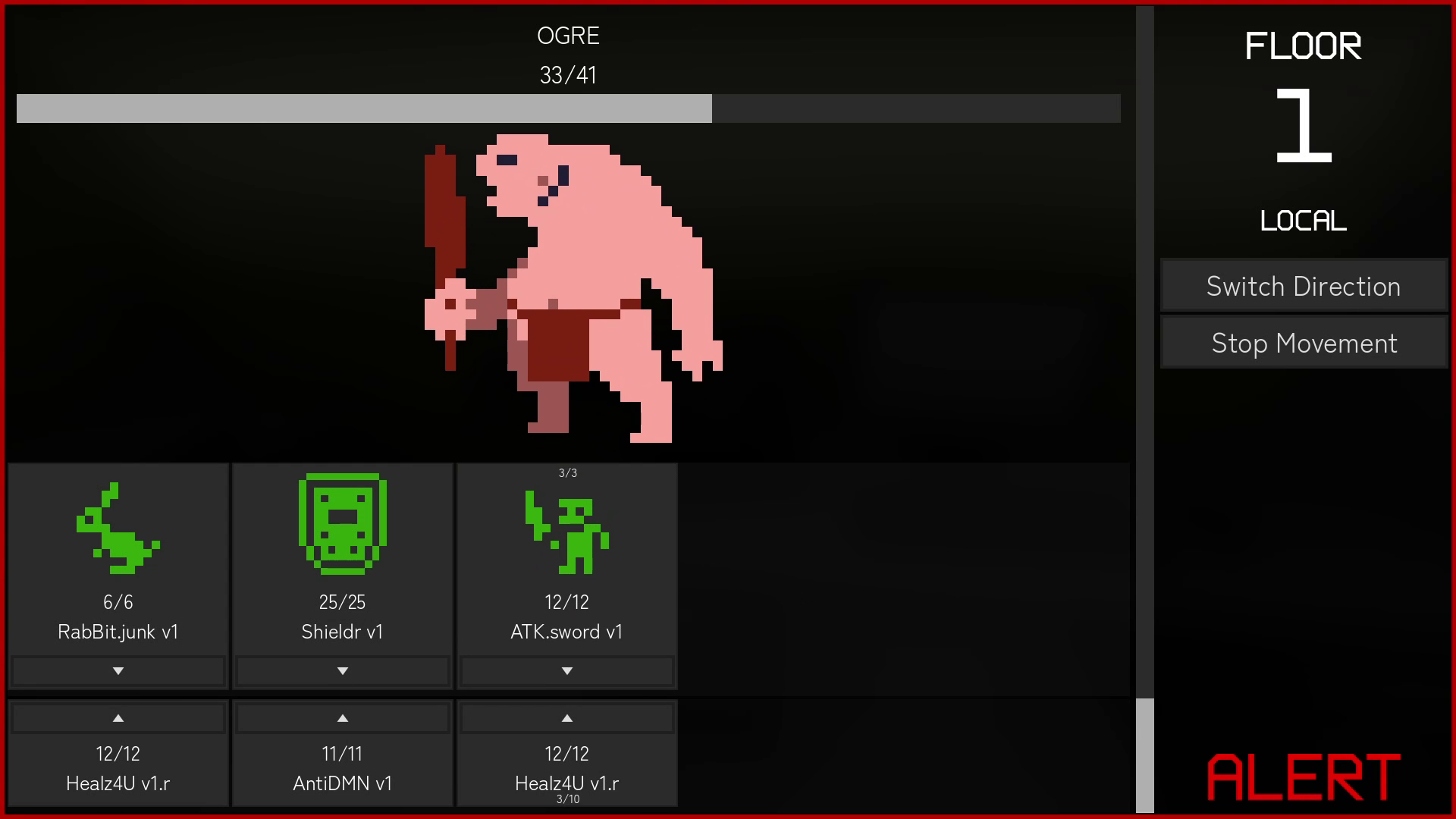
Hacking is essentially an autobattler. Once you find an access point, you can connect to it, pick what programs that will start active and it will automatically progress through the tower as long as you stay near the access point. Defenses may disable your programs or occasionally some manual input will be required. When that is the case, it will produce an audio notification (only you can hear it).
Stepping far enough away from the access point will forcefully jack you out of the network, which may inflict damage. In order to properly jack out, you have to interact with the access point and reverse its progress, and it will automatically jack out once it reaches the entrance. At any point you can interact with the access point to change active programs as well.
Programs come in a variety of types, some passive and some active. The most important type are combat programs. These will attack defense programs you come across that will block your progress until they are killed. Some other types include:
- Stat Buffers - increases the stats of the interface they are installed in, some examples of the stats:
- Speed - increases how fast you move up/down unlocked floors in the tower and how fast programs’ actions are
- Power - increases the % chance of succeeding non-combat progress checks
- Stealth - enemy actors in the network will have a lower chance of noticing you when you progress in the network
- Shield - defense programs will prioritize attacking these
When programs are disabled, they typically cannot be used in that mission’s network again, so multiple copies of programs may be necessary. However, hacking interfaces have a limit to how many programs can be active and how many can be stored in reserve. Programs stored on an interface can only be added/removed outside of a mission. Also, unlike in Tokyo, they cannot be equipped as weapons. Instead, they go into a new “auxiliary” slot (which may be used by future mechanics as well).
Enemy Hackers
There can also be active enemies in the network, which may buff defenses, make non-combat checks harder, or even directly attack your programs when alerted. There are two types: In-world hostile hackers, which can be found and disabled by simply killing them, and virtual AI hackers called Daemons, which cannot be disabled. Making progress in the towers may alert them to you, after which they’ll begin trying to stop you from progressing further. Certain programs may counter the enemy, which will disable their actions for a time.
Exports
Note: Exports are currently not implemented, so the final implementation may be slightly different than described here.
Exports will also return via these new hacking towers. Floors may contain an export which can be extracted from the network. I am currently not planning on implementing an “alternative” use for exports like what was in Tokyo - in actual gameplay I feel like most of them weren’t very useful (I’m not planning on reimplementing any kind of “container weapon” either). You’ll still be able to list them in an auction house, but instead of having to wait IRL time for them to sell, they will instead now be sold over in-game time.
I am much happier with this new system than I was with the hacking mechanics for Tokyo (which were admittedly half-baked and I didn’t have too many ideas for in the first place). I hope you find interacting with this fun once you’re able to play it.
Free Loadouts
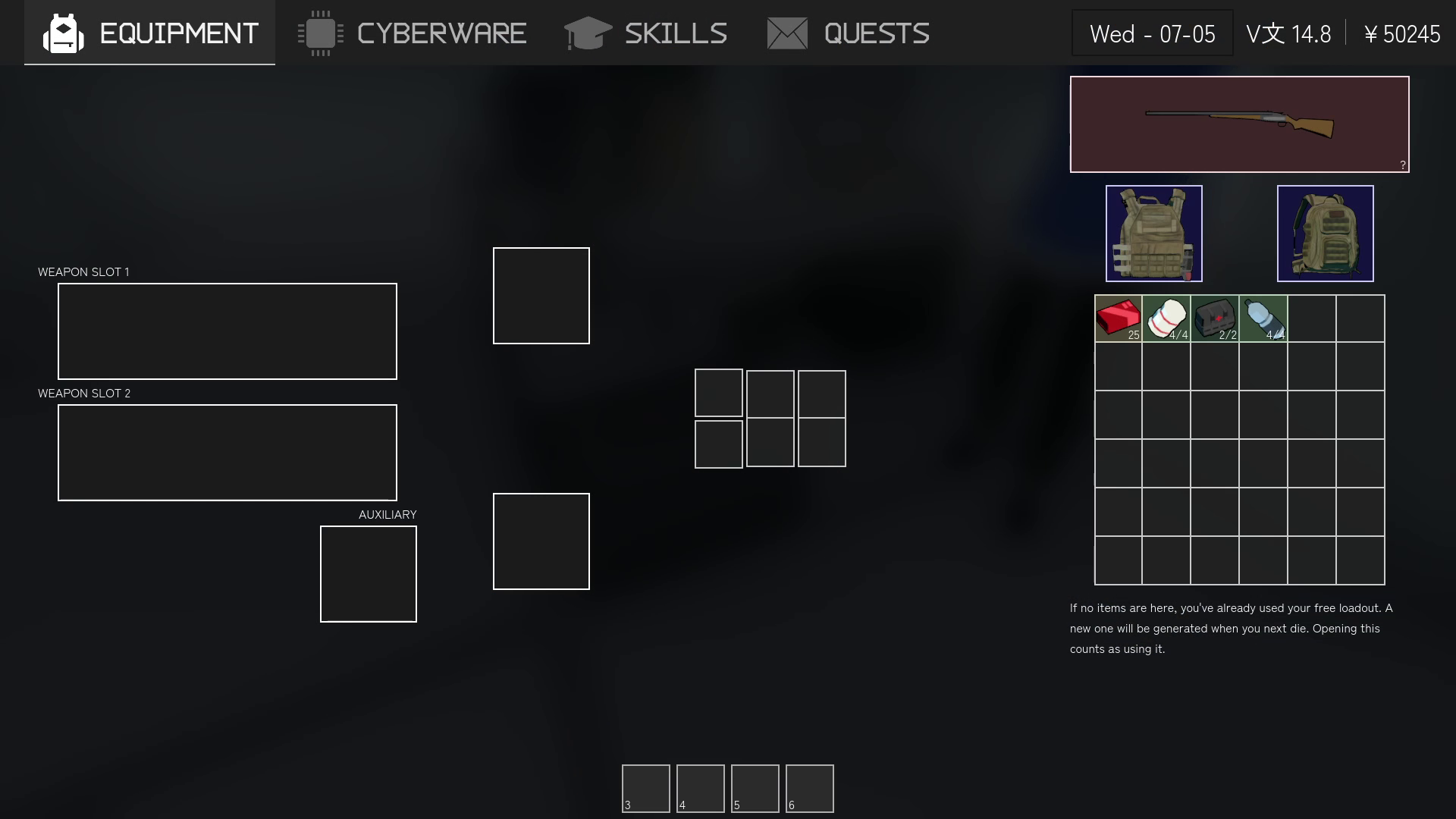
Long story short, after running out of gear during playtests multiple times I’ve realized that a free knife may not be enough for this game - it’s a lot easier to die. Because of this, certain traders now have a “free loadout box”. These will contain a randomly generated loadout from cheap, appropriate weapons and gear they have. Later traders will have better items in these. These can only be accessed after you die, and can only be accessed one time per death (as the screenshot says, opening it counts as accessing it, so if you leave this scene and come back, there will no longer be any gear in the box. at least until you die again).
New Objective Type(s)
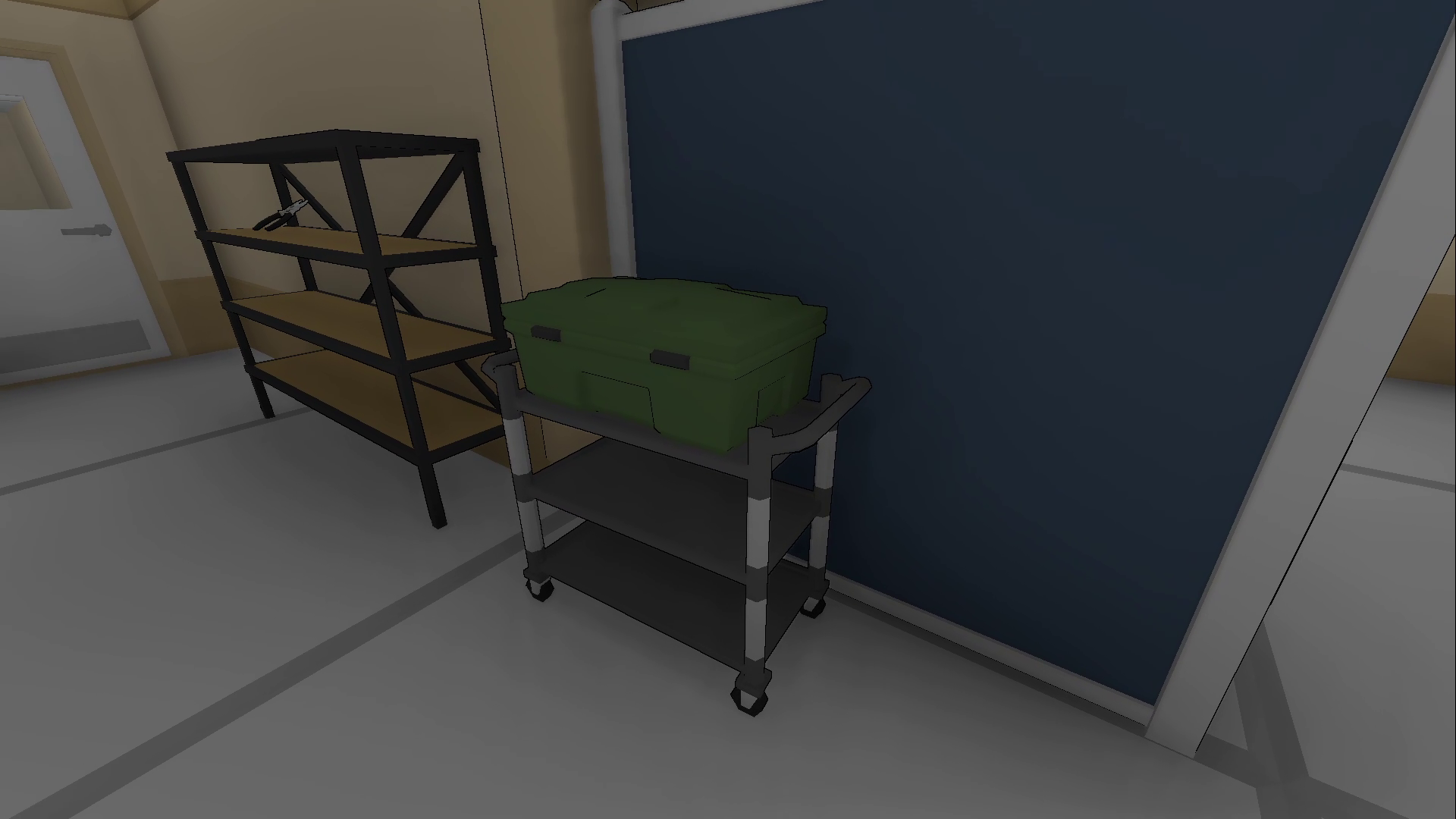
There are also some new objective types planned for OASIS II! I’ve implemented one of them now, and have at least 2 more that I plan to implement in the future. This is one idea that’s been turned into 3 variants: Transmit, DeadDrop, and Scatter. These all work fairly similarly: You take an objective item and deliver it to something somewhere in the level. For Transmit, these items are stored in a container at the start of the level and what you need to deliver it to is somewhere in the level. For DeadDrop, the items are scattered around the level (like Retrieval) and they need to be delivered to a container at the start of the level. For Scatter, both the items and where they need to go are scattered around the level.
I’ve also finished reimplementing the remaining objectives missing that were in Tokyo: Defuse and Cluster. These work fairly similarly to Tokyo’s versions, but for Cluster I’ve removed the central server that was a part of that.
For the future to-be-implemented objective types, here’s what they were initially inspired by so maybe you can get an idea of what they’ll be!
(base64, since this doesn’t have a spoiler tag) aW5zdXJnZW5jeSdzIGNoZWNrcG9pbnQsIGVsaXRlIGRhbmdlcm91cycgb24tZm9vdCBjb21iYXQgZG9taW5hdGlvbi10eXBlIHRoaW5n
New Stuff
As usual, here’s a list of what I’ve implemented since the last post:
- Finished Kansai trader scenes (though one is still missing a particular unique feature lol)
- Sped up makarov reload animations by about 25%
- Lots of new AI types (they can camp behind cover, attempt to flank, and more now!)
- New factions: Corporate security (generic), PMC
- Free loadout container
- New hacking mechanics
- New pistol: G17 (renamed K71) + machine pistol variant
- New minor mechanic: There is now a short delay before the insertion animation starts when reloading (This is different per magazine and also is affected by the inventory the to-be-inserted item is in!)
- New objective type (reimplemented): Defuse (works pretty much identically to how Defuse worked in Tokyo, main differences: don’t need to hold the interact key but still need to look at it while interacting and being near one that fails doesn’t kill you, for now these are still emps and not actual bombs lol)
- New objective type (reimplemented): Cluster (works similarly to how Cluster worked in Tokyo, but the central server the original had has been removed)
- New objective type: Transmit (a container is spawned at the entrance with certain items in it, these items need to be taken to certain entities in various parts of the level)
- New objective type: DeadDrop (a container is spawned at the entrance and certain items are spawned throughout the level, these items must be found and delivered to the container at the entrance)
- New objective type: Scatter (certain items are spawned throughout the level, these items must be collected and taken to an entity (or entities) found somewhere in the level)
Future
In terms of any kind of release, I’m still not completely certain what I want to do. I’m probably going to open a playtest before the end of the year, but I don’t think its completely ready just yet. It’s already released technically, but I haven’t made its sign ups public yet. I do have extra keys for it still so if you’re reading this and you want to try this now, message me on discord and I’ll give you one.
Past that, I’m undecided right now. Maybe early access next year? In terms of full release, I know it’ll be at least 2028 (that’s what I’m aiming for). I’d also like to support it with more post-launch content (compared to Tokyo’s post-launch updates) and potentially DLCs (extra regions and such), but again undecided for now, that’s super far away (though I do have 2 ideas for potential extra regions already lol). As always, I update the roadmap whenever I make progress. That’s about it for now, thank you for your support!